
Contents
• What exactly is this equipment
• Where and how it is used in practice
• Common problems encountered in operation
• Quality and supplier selection• Future outlook and conclusion
When you hear KYN28, the first thing that comes to mind is just a metal cabinet with circuit breakers. But in reality, if you dig deeper, it is a whole story about reliability, standards, and many nuances that only become apparent on site. Many people confuse it with conventional assemblies or think the main thing is the rated currents from the catalog. In fact, the key often lies in the execution details, which are specified in small print in the technical specifications.
What exactly is this equipment
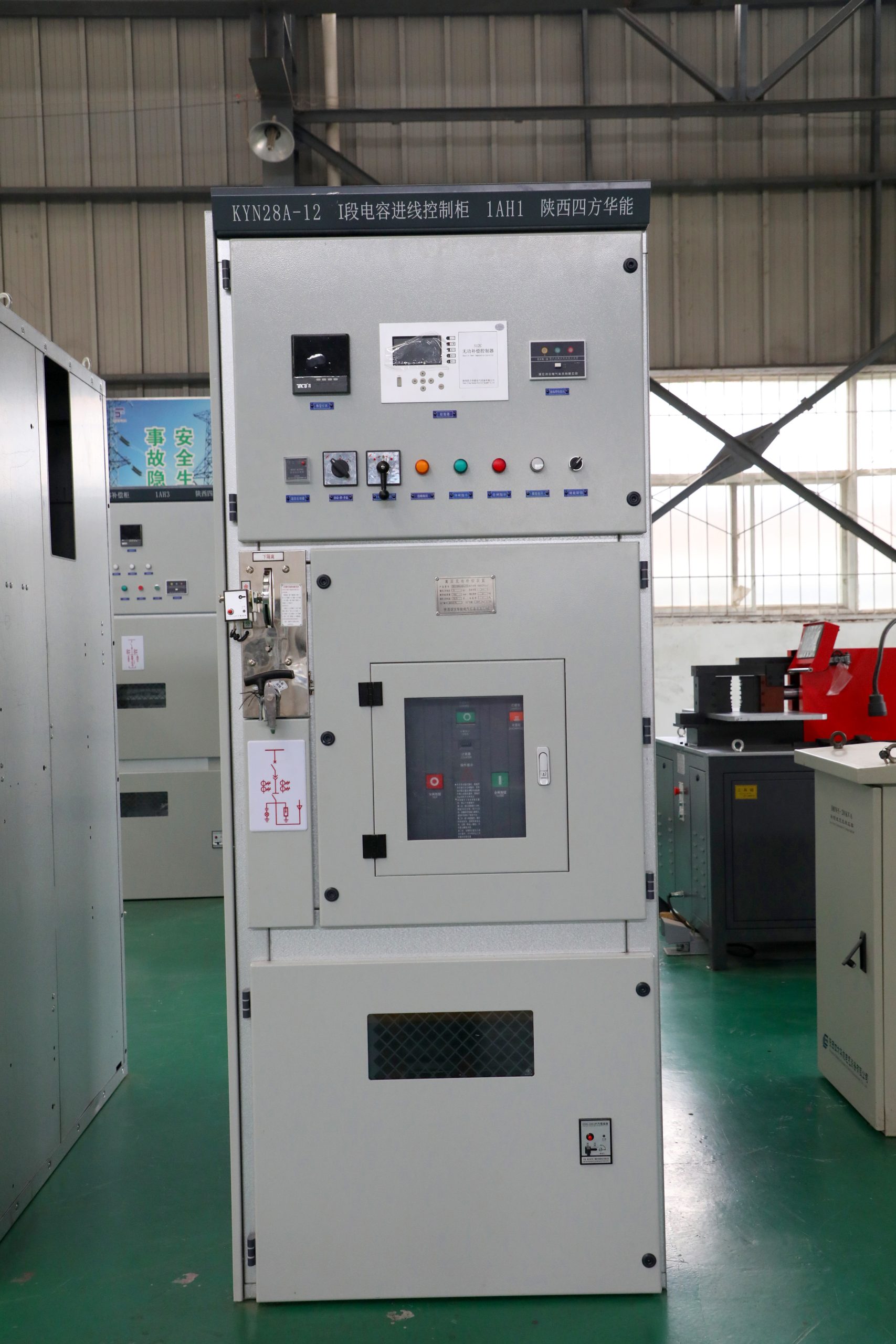
KYN28 is a standard series of 10 kV packaged distribution devices. The number 28 is not random: it designates a specific structure - K for camera/unit, Ya for withdrawable truck, N for indoor installation, and 28 for the design number. Simply put, it is a "box" that houses vacuum circuit breakers, disconnectors, instrument transformers, and protection devices. But the real value is in how it is assembled and tested.
I have worked with various suppliers, and here is what I noticed: externally, the cabinets may look identical, but the steel thickness, paint quality, and even frame rigidity can differ drastically. Once at an industrial site, a door became warped after one year of use - it turned out the manufacturer had cut costs on stiffeners. We had to reinforce the structure on site, leading to unnecessary downtime and hassle. That is why I now always look not only at certificates but also at real feedback from similar facilities.
An important point is the protection degree. Customers often require IP4X but forget about operating conditions. For example, if the room is humid or condensation is possible, you need a compartment heating and ventilation system. This is not included in the standard configuration and must be added separately. This is a typical case where a standard project requires non-standard modifications.
Where and how it is used in practice
Its main application is power input and distribution at industrial enterprises, data centers, and large commercial facilities. I have seen them in factory substations where the reliability of the cabinet determines the continuity of the entire production line. Every minute of downtime there means huge losses, so the selection of KYN28 is taken very seriously.
One interesting case was at a chemical plant, where installation was required in an aggressive environment. The manufacturer we worked with offered special coating and stainless steel fittings. Seemingly a small detail, but this solution protected the equipment from corrosion. Initially, this was not in the technical assignment - we had to convince the customer that standard execution would not work here.
Another aspect is the modernization of old substations. They often contain Soviet-era cells, and the task is to fit the modern KYN28 into existing dimensions and connect to old busbars. This creates challenges with dimensions, conductors, and protection. Sometimes it is easier to design a new cell from scratch than to adapt a standard one. Experience shows that a preliminary 3D model of all connections saves weeks of installation time.
Common problems encountered in operation
The most frequent issue is the mismatch between documentation and the actual equipment. When the cabinet arrives, the layout of some terminals or cable entries differs from the diagram, especially for secondary circuits. We have to re-mark and revise the as-built documentation on site. This is routine, but almost no large project can do without it.
There have been cases with new suppliers cutting costs on busbar connection quality. After thermal cycling (loading and unloading), contacts began to loosen and overheat. This was only detected by thermal imaging during routine inspections. Now I always insist on additional checking of torque values before commissioning, regardless of declared factory tests.
Another headache is the compatibility of microprocessor protections from different manufacturers with the cell. Seemingly everything follows standard protocols, but setting up signal exchange can turn into a separate project. Once, due to a logic mismatch in the withdrawable truck interlock, we had to reflash the relay terminal. We lost time, but gained unique experience in fine-tuning the interaction.
Quality and supplier selection
The quality of KYN28 starts with design and ends with supervisory installation. I have seen excellent cells ruined by improper installation. That is why it is important that the supplier not only sells equipment but also provides full-cycle support. For example, Shaanxi Sefon Electrical Equipment Co., Ltd. (website: sefon-electric), a full-cycle enterprise from development to service, often provides exactly this kind of comprehensive support. This is valuable when you need not just a product, but a solution for a specific task.
Their approach, based on colleagues' experience and public information, is built on strict quality control and a strong technical foundation. For series like KYN28, this is critical, because the slightest defect in insulation or mechanics can lead to serious consequences. When choosing, I always pay attention to whether the manufacturer has its own design and testing center - an indirect sign that the product will be refined for real needs, not just assembled from purchased components.
At the same time, you should not chase the lowest price. A cheap KYN28 almost always means simplified mechanical drives, lower-quality current-carrying parts galvanics, and weak technical support. In the long run, savings at the purchase stage turn into higher maintenance and repair costs. It is better to conduct a thorough audit of potential suppliers once, review their completed projects, or even better, visit an operating site.
Future outlook and conclusion
Currently, the market shows a trend toward digitalization of such cabinets. KYN28 is increasingly equipped with sensors for online monitoring of temperature, circuit breaker position, and contact wear. This is no longer just a metal box, but an element of a "smart" substation. It will be interesting to see how this changes maintenance approaches - possibly scheduled repairs will become a thing of the past, replaced by predictive analytics.
However, new technologies do not cancel basic principles. Reliable insulation, well-thought-out layout, and high-quality materials were important 20 years ago and will remain important in 20 years. Any "smart" functions are just an add-on to this foundation.
In conclusion, KYN28 is not just an abbreviation from a catalog. It is a working tool on whose selection and operation a great deal depends. Understanding its structure, knowing typical problems, and taking a careful approach to manufacturer selection are what distinguish formal supply from a successful project. And yes, it is always worth leaving room for adjustments in the specification - because everything looks perfect on paper, but in reality, something will always require on-site modifications.