
As modern power grids become increasingly complex and require higher levels of reliability, secondary protection vehicles are becoming an important solution for improving power system protection, maintenance efficiency, and emergency response capabilities. By integrating advanced relay protection, control systems, communication equipment, and testing devices into a mobile platform, the secondary protection vehicle provides utilities with a flexible and efficient approach to managing substation protection operations.
What Is a Secondary Protection Vehicle?
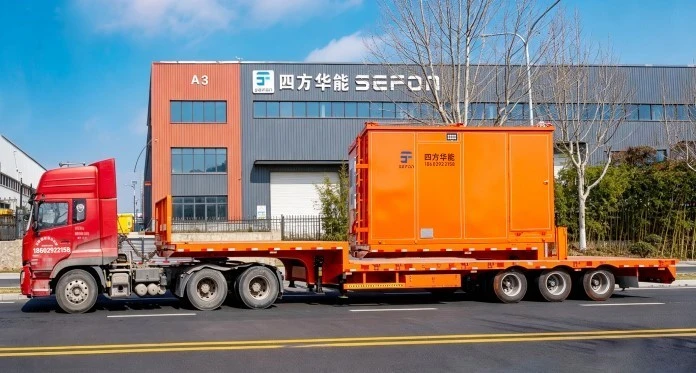
A secondary protection vehicle is a mobile power system support unit designed to perform protection, monitoring, testing, and control functions for substations and high-voltage networks. It mainly focuses on secondary systems, including relay protection, automation, measurement, communication, and monitoring equipment.
Unlike traditional fixed protection systems, the secondary protection vehicle can be quickly transported and deployed to different locations. It provides temporary protection support during equipment maintenance, emergency repairs, system upgrades, or unexpected grid failures.
Key Features and Technical Advantages
The secondary protection vehicle is designed to provide fast, reliable, and intelligent protection support in various power system environments. Its major advantages include:
- Rapid deployment capability: Quickly arrives at target sites and provides temporary protection functions during emergencies or maintenance periods.
- Integrated protection system: Combines relay protection devices, control units, communication equipment, and testing instruments in one mobile platform.
- High operational flexibility: Supports different substations and power projects without requiring permanent infrastructure changes.
- Advanced monitoring and diagnosis: Enables real-time equipment status monitoring, fault analysis, and protection system testing.
- Strong environmental adaptability: Designed for outdoor operation under different climate and working conditions.
These features make the secondary protection vehicle an ideal choice for utilities seeking to reduce downtime and improve grid resilience.
Working Principle and System Design
The secondary protection vehicle operates as a mobile extension of a substation's protection and automation system. After arriving at the site, it connects with existing primary equipment through standardized interfaces and communication networks.
The vehicle is equipped with intelligent relay protection devices, data acquisition systems, industrial control platforms, and communication modules. Engineers can perform protection tests, fault simulations, parameter adjustments, and system monitoring through local or remote control.
By providing temporary secondary protection functions, the vehicle ensures continuous and safe operation of power networks while fixed protection equipment is under maintenance or replacement.
Application Scenarios in Power Systems
The secondary protection vehicle is widely used in situations where fast response and flexible deployment are required:
- Emergency replacement of damaged protection equipment
- Substation maintenance and renovation projects
- Power grid expansion and commissioning activities
- Temporary protection support for large infrastructure projects
- Fault investigation and protection system testing
- Disaster recovery operations after extreme weather events
For utilities, the use of mobile secondary protection solutions can significantly reduce outage time and improve overall operational efficiency.
Industry Trends and Market Outlook
With the rapid development of smart grids and digital substations, the demand for intelligent mobile protection solutions is increasing worldwide. The secondary protection vehicle perfectly matches this trend by combining mobility, automation, and advanced digital technologies.
Future secondary protection vehicles are expected to integrate technologies such as cloud-based monitoring, artificial intelligence fault diagnosis, IoT communication, and automated testing platforms. These innovations will further enhance grid management efficiency and support the transition toward more resilient power systems.
Conclusion
The secondary protection vehicle represents a new generation of mobile power protection technology. By integrating advanced protection equipment, intelligent control systems, and flexible deployment capabilities, it provides an efficient solution for modern grid maintenance and emergency response.
As power networks continue to pursue higher reliability and smarter operation, secondary protection vehicles will play an increasingly important role in ensuring safe, stable, and uninterrupted electricity supply.