
As electricity demand continues to grow and distribution networks become more complex, maintaining stable voltage levels has become a major challenge for utilities worldwide. The SVR automatic step voltage regulator is emerging as an advanced solution for improving voltage quality, reducing power losses, and enhancing the reliability of medium-voltage distribution systems. With intelligent control technology and automatic adjustment capabilities, the SVR provides an efficient approach to managing voltage fluctuations in modern power grids.
What Is an SVR Automatic Step Voltage Regulator?
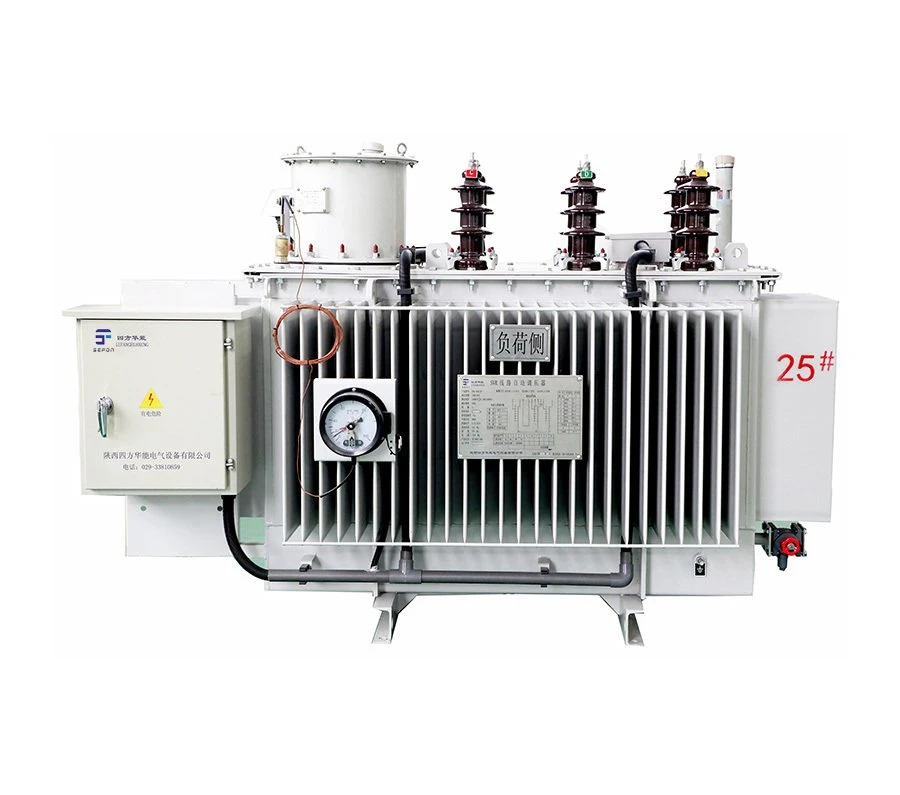
The SVR (Automatic Step Voltage Regulator) is a voltage regulation device installed in medium-voltage distribution lines to automatically adjust output voltage according to real-time grid conditions. It is mainly used to compensate for voltage drops caused by long-distance transmission, fluctuating loads, and uneven power distribution.
Unlike traditional manual voltage adjustment equipment, the SVR can continuously monitor system voltage and automatically change tap positions to maintain voltage within the desired range. This ensures stable electricity supply for residential, commercial, and industrial users.
Key Features and Technical Advantages
The SVR automatic step voltage regulator is designed to provide accurate, reliable, and intelligent voltage control. Its main advantages include:
- Automatic voltage regulation: Continuously adjusts voltage levels according to load changes and network conditions.
- High regulation accuracy: Maintains stable output voltage and improves power quality for end users.
- Fast response capability: Quickly compensates for voltage fluctuations caused by sudden load variations.
- Intelligent monitoring system: Supports real-time data collection, remote communication, and operational analysis.
- Reliable protection functions: Equipped with overvoltage, undervoltage, overload, and short-circuit protection.
These features make SVR regulators an ideal solution for distribution networks requiring improved voltage stability and energy efficiency.
Working Principle and System Design
The SVR automatic step voltage regulator operates by detecting voltage variations through advanced sensing and control systems. When the input voltage changes beyond the preset range, the controller automatically sends commands to adjust the transformer tap position.
Through precise step-by-step voltage adjustment, the SVR compensates for line voltage losses and maintains a stable output voltage. The system can operate automatically without frequent manual intervention, reducing maintenance requirements and improving grid management efficiency.
Modern SVR systems may also integrate digital controllers, communication modules, and remote monitoring platforms, enabling utilities to achieve smarter and more flexible distribution network operation.
Application Scenarios in Power Distribution Systems
The SVR automatic step voltage regulator is widely applied in various power distribution environments, including:
- Long-distance rural distribution lines with significant voltage drops
- Industrial areas with unstable or rapidly changing loads
- Renewable energy integration systems such as solar and wind power networks
- Urban distribution networks requiring improved voltage quality
- Remote areas with weak grid infrastructure
By improving voltage consistency, SVR technology helps reduce equipment failures, improve energy efficiency, and extend the service life of electrical equipment.
Industry Trends and Market Outlook
With the rapid development of smart grids and distributed energy resources, intelligent voltage regulation technologies are becoming increasingly important. Utilities are adopting SVR automatic step voltage regulators to improve grid flexibility, support renewable energy integration, and reduce operational costs.
Future SVR products are expected to incorporate advanced technologies such as artificial intelligence-based control algorithms, IoT communication, cloud monitoring, and predictive maintenance systems. These innovations will enable more accurate voltage management and contribute to the development of smarter and more resilient power networks.
Conclusion
The SVR automatic step voltage regulator represents a significant advancement in modern distribution voltage control technology. By providing automatic adjustment, intelligent monitoring, and reliable protection, it offers an effective solution for maintaining stable voltage and improving power quality.
As global power systems continue moving toward higher efficiency and intelligence, SVR regulators will play an increasingly important role in creating safer, more reliable, and more sustainable distribution networks.