
As global electricity demand continues to increase, industries and power utilities are facing growing challenges in expanding power capacity quickly and efficiently. Traditional substation construction often requires significant investment, long project cycles, complex approval processes, and large-scale civil engineering work.
To address these challenges, substation leasing has emerged as an innovative power infrastructure service model. By providing temporary or long-term access to mobile substations, containerized substations, and prefabricated power equipment, substation leasing enables customers to obtain reliable electricity supply without the need for immediate large capital investment.
This flexible approach is becoming increasingly popular in renewable energy projects, industrial expansion, infrastructure construction, and emergency power restoration applications.
Features of Substation leasing
Simple procedures, fast station deployment
Factory-built, rapid commissioning
High reliability, small interface footprint
Straightforward O&M, low investment
Mass production, small footprint
Easy installation, simple construction
Complete functions, safe to use
Prefabricated Substation Leasing Solution
Primary Equipment
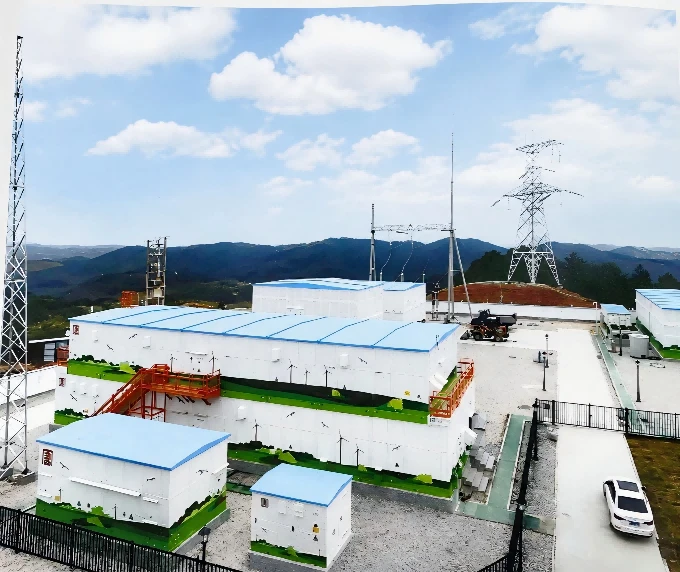
The leased equipment features a mobile installation structure(simple foundation). The equipment inside the prefabricated cabin consists of electrical equipment and various auxiliary systems, including independent power supply equipment, monitoring instruments, protection panels, monitoring signals, and emergency lighting. Fire alarm devices and security monitoring systems may also installed according to customer requirements. Temperature and humidity sensors and a control system are also provided inside the cabin to regulate the internal temperature and humidity, ensuring the stable operation of the equipment inside. Cables adopt side-entry and side-exit arrangement, providing a degree of integration. The primary equipment and main components all comply with State Grid standards, while the secondary equipment uses protection devices made by NARI, Nanzi, Sefon, and XJ, further ensuring operational safety and reliability.
The 110kV and 35kV leasing solutions can meet both cable incoming line and overhead incoming line requirements. The maximum main transformer capacity they can accommodate is up to 63,000 kVA for a single main transformer at 110kV, and up to 31,500 kVA for a single main transformer at 35kV.
Secondary Equipment
The line protection and metering devices of the leased equipment feature a decentralized installation arrangement. All leased equipment is configured with a telecontrol system, in which the communication panel is computer-based and can monitor and control the operating equipment on site, thereby providing functions such as data acquisition, equipment measurement, parameter adjustment, and various alarm signals.
| Device | Configuration |
| 10kV/35kV switching station |
The 10kV switching station features a telecontrol communication panel, line protection, and a 38Ah power supply panel. The 35kV switching station features line protection, a telecontrol communication panel, a 65 Ah AC/DC power supply panel, and a main transformer protection panel. |
| Complete 35kV/10kV station |
Telecontrol communicaion panel, AC/DC power supply panel, line protection, and main transformer protection panel Optional equipment includes device monitoring, video surveillance, dispatching data network, and optical terminal equipment |
| Complete 110kV/10kV station | Line protection, device monitoring, common measurement and control, metering panel, telecontrol communication panel, AC/DC power supply panel, and main transformer protection panel; optional equipment includes video surveillance, dispatching data network, and optical termical equipment. |
| 35kV substation telecontrol communication panel | Two telecontrol communication devices, two switches, one protocol converter, one modem, one eletric energy acquisition device |
| 35kV substation main transformer protection panel | One main transformer differential protection device, one main transformer high-side backup protection device, one main transformer low-side backup protection device, one non-electrical protection device, one integrated main transformer measurement and control unit, one operating box, one printer |
| 110kV substation telecontrol communication panel | Two telecontrol communication device, two switches, one protocol converter, one modem, two clock synchronization devices, one common measurement and control unit, one photoelectric converter |
| 110kV substation mian transformer measurement and control panel |
One main transforermer differential protection device, one mian transformer high-side backup protection device, one mian transformer low-side backup protection device, one non-electrical protection device, one operating box, one printer One main transformer high-voltage measurement and control unit, one main transformer low-voltage measurement and control unit, one main transformer body measurement and control unit |
Construction and Installation
The installation timr for a 110kV substation is about 3 to 4 days, while commissioning and acceptance takes 2 days. During installation and commissioning of our equipment, operation of the original station is not affected, as the work is carried out independently. After installation and commissioning of the leased equipment are complete, the original station line cables only need to be connected. Under normal conditions, 110kV line transfer can be completed within 2 hours. The leased equipment is delivered by flatbed truck, and no other work scope is included. After the equipment arrives on site, our after-sales personnel will instruct the site contractor for equipment installation and commissioning, and will also provide equipment operation training and instructions for ues.
Future Development Trends of Substation Leasing
With the global transition toward smart grids and renewable energy, the demand for flexible power infrastructure will continue to grow. Future substation leasing services will increasingly integrate digital monitoring, intelligent control systems, and remote operation technologies.
The combination of advanced equipment and flexible business models will make substation leasing an important part of future energy infrastructure development.
Conclusion
Substation leasing offers a modern alternative to traditional power infrastructure investment by providing fast deployment, cost efficiency, and operational flexibility. Whether supporting renewable energy projects, industrial development, or emergency power restoration, leased substations help customers achieve reliable electricity supply with greater efficiency.
As global energy systems continue to evolve, substation leasing will become an increasingly valuable solution for building flexible, resilient, and sustainable power networks worldwide.