
With the rapid growth of modern electrical networks, maintaining stable voltage quality has become a major challenge for utilities and industrial power systems. Long-distance power transmission, fluctuating loads, distributed energy resources, and renewable energy integration can cause voltage deviations that affect equipment performance and grid reliability.
The Hybrid SVR, has emerged as an innovative solution that combines traditional voltage regulation technology with advanced power electronics. By integrating fast dynamic compensation and intelligent control, Hybrid SVR provides a more efficient and flexible approach to voltage stabilization compared with conventional mechanical regulators.
Overview of hybrid SVR
The hybrid SVR integrates SVR with power electronics, combining coarse regulation by the SVR with fine regulation by the power electronic module. The regulation accuracy of the SVR can be set as ±5%, while the regulation accuracy of the power electronic module is < 1%, enabling more flexible and precise voltage control. This combined approach can also reduce the operating frequency of the on-load tap changer and improve the service life of the SVR. It is particularly suitable for applications with frequent voltage fluctuations and conditions that exceed the voltage limit.
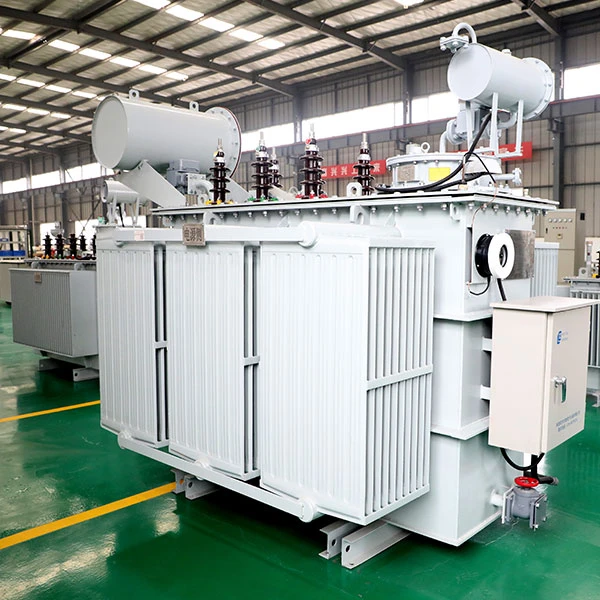
Structure and working principle of hybrid SVR
The hybrid SVR consists of the SVR autotransformer voltage regulator, a power electronic module, and a series coupling transformer. The SVR autotransformer voltage regulator performs bidirectional coarse voltage regulation, handling adjustments that do not require frequent switching. The power electronic module features a series-shunt configuration and combines with the series coupling transformer to achieve bidirectional fine voltage regulation.
Fine voltage regulation is realized on the series side of the power electronic module. By adjusting the series-side inverter, the voltage across both ends of the series coupling transformer is changed to enable bidirectional voltage regulation and voltage imbalance compensation. The shunt side of the power electronic module can provide reactive power compensation.
Features of hybrid SVR
Combines autotransformer coarse regulation with stepless fine regulation by the power electronic module for higher accuracy;
Wide voltage regulation range with effective performance, including reactive power compensation capabilities;
Fine regulation by the power electronic module reduces frequent on-load tap changer cycles, thereby extending service life;
Integrated design, offering a compact size, large capacity, light weight, and small footprint for easy installation;
Excellent control and communication performance, supporting the four functions of telemetry, remote signaling, remote adjustment and remote control.
Main Parameters
| Name | Parameters | ||
| Voltage Class | 6kV | 10kV | 35kV |
| Rated Capacity | 500~5000kVA | 315~12500kVA | 2500~25000kVA |
| Phases | Three-phase | ||
| Rated Frequency | 50Hz | ||
| Wiring Mode | Ya0 (three-phase, three-wire star conection) | ||
| Cooling Method | Oil Natrual Air Natrual (ONAN) | ||
| Tap Positions | 7 or 9 positions | ||
| Mechanical Life | > 500,000 cycles | ||
| Electrical Life | > 50,000 cycles | ||
| Service Life of Power Electronics | 15 years | ||
| Voltage Regulation Accuracy | < 1% | ||
| Operating Time | < 10ms | ||
| Voltage Regulation Range | Options: (-10% to +10%), (-5% to +15%), (0 to +20%), and (0 to +30%) | ||
| Protection Functions | Overcurrent and undervoltage protection, daily cycle frequency limit, upper and lower tap limit protection, etc. | ||
| Display Functions | Real-time display of voltage, current, tap position, daily cycle count, and total cycle count | ||
| Communication Method | Comes with a standard RS-485 communication interface for remote monitoring | ||
Applications of Hybrid SVR in Modern Power Systems
Future Development Trends of Hybrid SVR
With the advancement of smart grids and digital energy management, Hybrid SVR technology is expected to develop toward higher efficiency, compact design, and intelligent operation.
Future solutions will increasingly incorporate artificial intelligence algorithms, IoT communication, and advanced monitoring systems to achieve predictive voltage control and autonomous grid optimization.
As renewable energy penetration continues to increase worldwide, Hybrid SVR will become an important technology for building more flexible, stable, and resilient distribution networks.
Conclusion
The Hybrid SVR represents a new generation of voltage stabilization technology that combines the reliability of traditional regulation systems with the speed and intelligence of power electronics.
By providing rapid voltage compensation, improved power quality, and smart grid compatibility, Hybrid SVR offers utilities and industries an effective solution for managing modern power challenges. As global power systems continue to evolve, Hybrid SVR will play a critical role in creating more efficient and reliable electrical networks.