
Overview of Automatic Step Voltage Regulator(SVR)
The Automatic Step Voltage Regulator(SVR) adjusts the tap position of the on-load tap changer based on the voltage conditions. This enables the adjustment of the turns ratio and ensures the output voltage remains stable within the required range. It can be used in power supply lines involving long transmission distances, heavy loads, large voltage fluctuations, and substandard power quality. It is also suitable for industrial and mining enterprises where voltage quality does not meet manufactuing requirements. A national patent has been granted for this product, Patent No.: ZL201020581818.4.
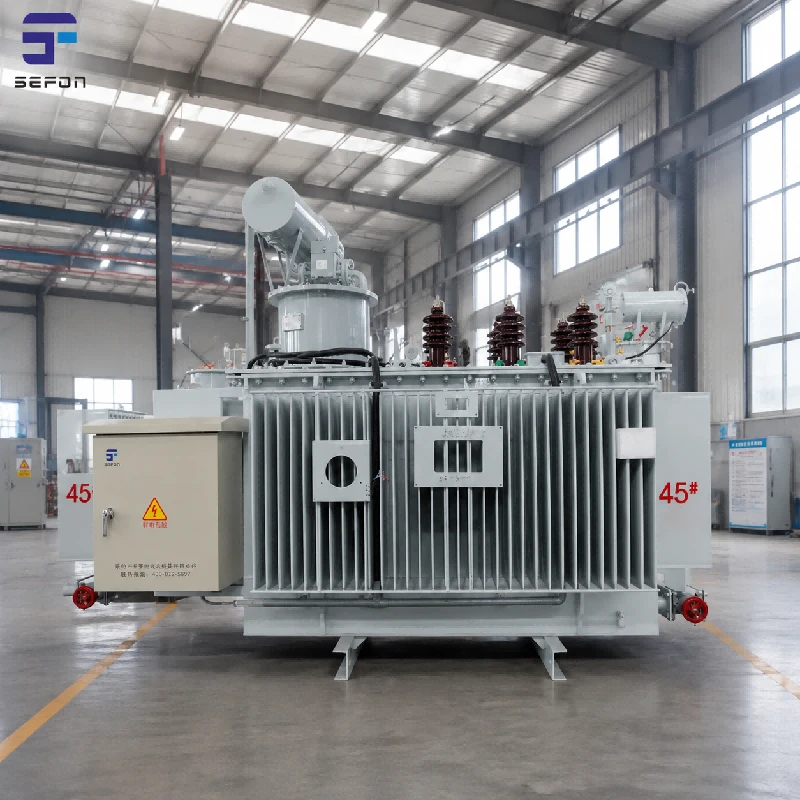
Key Advantages of Automatic Step Voltage Regulators
1. Improved Voltage Stability and Power Quality: voltage instability can cause equipment malfunction, reduced efficiency, and shortened service life of electrical devices. Automatic Step Voltage Regulators continuously monitor line voltage changes and respond quickly to maintain voltage levels within acceptable limits. This capability is especially valuable for rural distribution networks, industrial facilities, and areas with long-distance power feeders where voltage fluctuations are more common.
2. Reduced Power Losses and Increased Energy Efficiency: excessive voltage deviation can increase energy consumption and transmission losses. By optimizing voltage levels, SVRs help distribution networks operate more efficiently. The improved voltage regulation can: reduce unnecessary energy losses, improve transformer efficiency, enhance electrical equipment performance, and lower long-term operating costs. For utilities seeking grid optimization, SVR technology provides an economical approach to improving network efficiency without major infrastructure upgrades.
3. Intelligent Automation for Modern Smart Grids: as smart grid technology continues to advance, automatic voltage regulation has become a key component of intelligent power distribution systems. Modern SVRs can be integrated with digital monitoring platforms and communication systems to provide: real-time voltage monitoring, remote operation and control, fault diagnosis, and data recording and analysis. These intelligent features allow utilities to manage distribution networks more effectively and improve operational reliability.
Future Development Trends of automatic Step voltage regulator
With the global transition toward digital and intelligent power grids, Automatic Step Voltage Regulators are evolving toward smarter and more efficient solutions. Future SVR systems will increasingly incorporate advanced sensors, artificial intelligence-based control algorithms, and remote management technologies.
These innovations will enable more accurate voltage regulation, faster response times, and improved adaptability to complex power network conditions.
Conclusion
The Automatic Step Voltage Regulator (SVR) plays an important role in improving distribution network stability and power quality. Through automatic voltage adjustment, intelligent monitoring, and efficient operation, SVRs provide utilities and industries with a reliable solution for managing voltage variations.
As power systems continue to become more complex and renewable energy penetration increases, Automatic Step Voltage Regulators will remain a vital technology for building safer, smarter, and more resilient electrical networks.