
Introduction
The low-voltage distribution area energy storage system is a modular, intelligent energy storage device specially deployed at the terminal of low-voltage power distribution networks. Different from large-scale centralized energy storage power stations, it focuses on solving various pain points of terminal power grids, including transformer overload, terminal voltage fluctuation, three-phase unbalance, and low local photovoltaic consumption rate. As a flexible grid upgrading solution, it has gradually become standard equipment for urban old community power grid renovation, rural power grid upgrading, and distributed photovoltaic supporting projects worldwide. With modular design, plug-and-play installation and intelligent automatic scheduling capabilities, it helps power operators, property management enterprises and industrial and commercial users optimize power quality and reduce operation costs efficiently.
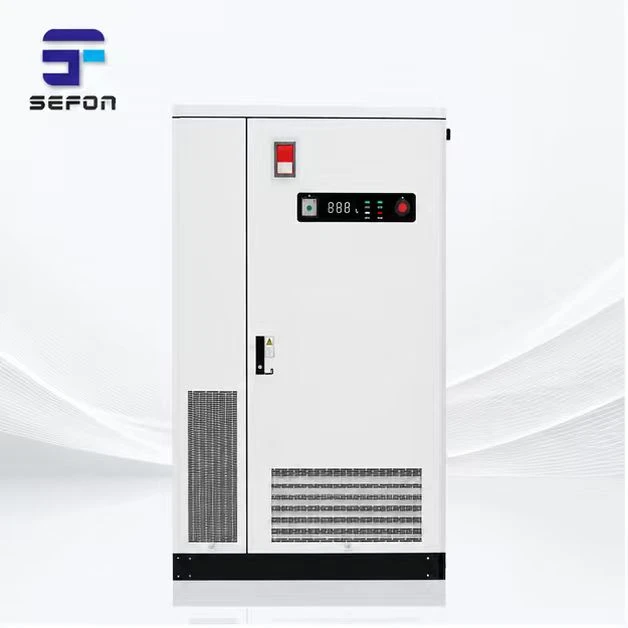
Core Functions & Key Advantages
- Peak shaving and valley filling: the low-voltage distribution area energy storage system automatically stores electricity during off-peak hours or periods of high photovoltaic power generation, and discharges power to supplement grid capacity during peak power consumption hours. It can effectively reduce the load rate of distribution transformers by 20%-40%, realizing virtual capacity expansion without replacing transformers or renovating power lines. This avoids the high cost and long construction cycle of traditional rigid grid renovation, cutting comprehensive investment costs by more than 70% and shortening the project cycle from several months to a few weeks.
- High-precision power quality optimization: the low-voltage distribution area energy storage system adopts millisecond-level intelligent response technology to dynamically adjust output power, effectively solve common terminal grid problems such as terminal voltage drop, voltage surge and three-phase load imbalance. It stably locks the terminal voltage within the standard 220V range, eliminates harmonic interference, and ensures stable and reliable power supply for residential users, small industrial and commercial equipment. For rural power grids and long-distance distribution lines with weak power supply capacity, this device can significantly improve power supply stability and solve the long-standing problem of poor power quality at the grid terminal.
- Lightweight modular design and ultra-convenient installation: the integrated equipment of battery and converter supports independent handling and plug-and-play access, without large-scale civil construction or power outage construction. It is connected in parallel with the original low-voltage line system, which will not affect the normal operation of the existing power grid. Meanwhile, the built-in intelligent energy management system (EMS) realizes fully automatic unattended operation, real-time monitoring of grid operation data, and autonomous adjustment of charge and discharge strategies, greatly reducing manual operation and maintenance costs.
Main Application Scenarios
This energy storage system is widely applicable to multiple terminal power grid scenarios. In urban old residential areas, it solves the problem of insufficient transformer capacity and voltage instability caused by centralized power consumption of air conditioners and electric heaters in summer and winter. In rural power grid reconstruction projects, it makes up for the defects of long power supply radius and weak terminal power supply capacity. For residential and industrial-distributed photovoltaic projects, it absorbs excess photovoltaic power, improves local energy consumption rate, and avoids power reverse transmission and grid connection losses. At the same time, it can be used as an emergency backup power supply for community public facilities and small commercial places, providing reliable power guarantee for sudden power outages.
Market Value & Development Prospect
With the global acceleration of new energy penetration and the upgrading of smart grids, terminal power grid optimization has become an important link in energy system transformation. Traditional grid renovation methods are no longer able to adapt to the flexible and low-cost power demand of modern society. The low-voltage distribution area energy storage system, with the advantages of low investment, quick effect, flexible deployment and multi-scenario adaptation, has become the mainstream choice for global power grid terminal renovation. It can not only reduce grid operation and maintenance costs and improve power supply reliability for power enterprises, but also create economic benefits such as peak-valley price difference arbitrage and demand charge reduction for users, bringing dual value of social benefit and economic benefit.
Conclusion
To sum up, the low-voltage distribution area energy storage system is an indispensable core equipment for modern smart low-voltage grid construction. It perfectly solves various bottleneck problems of terminal power distribution through intelligent energy scheduling and flexible power regulation. Whether for grid renovation, photovoltaic matching, or power quality optimization and emergency power supply guarantee, it shows outstanding application value. It is the optimal cost-effective solution for global low-voltage distribution network upgrading and terminal energy efficiency improvement.