
I. Industry Positioning and Core Value of MNS Low-Voltage Draw-out Switchgear
MNS (Modular Network Switchgear) low-voltage draw-out switchgear is an internationally mainstream low-voltage power distribution equipment. It is widely used in low-voltage power distribution systems for industrial production, commercial buildings, transnational projects, and other scenarios, undertaking core functions such as power distribution, line protection, and equipment control. Its modular design, high reliability, and flexible adaptability have made it the "central nervous system for safe power supply" in modern power distribution systems. Especially in large-scale project tenders (e.g., transnational engineering, industrial plant construction), it is one of the core selected equipment for low-voltage power distribution solutions.
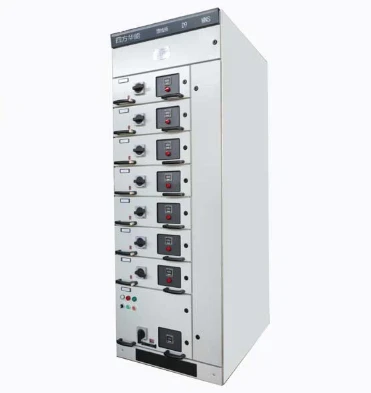
II. Industry Interpretation of Core Technical Parameters
1. Voltage and Frequency Parameters: Adapting to Multi-Scenario Power Grid Requirements
-
Rated voltage of main circuit (V): AC 380(400), (660)
380(400)V is the global universal standard voltage for low-voltage power distribution (mainstream markets such as China and the EU), while 660V is suitable for high-voltage level low-voltage power distribution scenarios such as mines and heavy industry, reflecting the equipment's compatibility with different industrial needs.
-
Rated voltage of auxiliary circuit (V): AC 220, 380(400); DC 110, 220
The dual-voltage system covers AC control and DC operation requirements, adapting to different power configurations of relay protection and automatic control systems, and serving as a key guarantee for the "stable control circuit" of industrial equipment.
-
Rated frequency (Hz): 50(60)
Compatible with power grid frequencies in different regions such as China (50Hz) and North America (60Hz), it provides global adaptability for transnational project tenders, which is also one of the core considerations for international project selection.
2. Current and Short-Circuit Withstand Capacity: Bearing the Limit of Power Transmission
-
Rated current (A):
Horizontal busbar: ≤6300
Meets the main line power distribution needs of high-density power consumption scenarios such as large industrial plants and data centers, and is a core indicator of the equipment's "high-power bearing capacity".
Vertical busbar (MCC): 1000
Suitable for branch circuit power supply of Motor Control Centers (MCC), balancing flexibility and current-carrying capacity.
-
Bus rated short-time withstand current (kA/S): 50, 80
-
Bus rated short-time peak withstand current (kA/0.1S): 105, 176
-
These parameters reflect the equipment's impact resistance during short-circuit faults. The 80kA-level parameter can meet the fault protection needs of complex power distribution systems such as heavy industry and high-rise buildings, avoiding power outages caused by equipment burnout.
3. Insulation and Voltage Withstand Performance: Core Barrier for Safety Protection
- Rated insulation voltage (V): 660(1000)
Higher than the rated voltage of the main circuit, it reserves insulation redundancy and reduces the risk of electric leakage in humid and dusty environments.
- Power frequency test voltage (V/1min):
Main circuit: 2500
Auxiliary circuit: 1760
Complies with international standards such as IEC 60439, ensuring that the equipment will not cause safety accidents due to insulation aging during long-term operation, and serving as a key basis for "qualified insulation performance" in tender documents.
4. Structure and Protection: Adapting to Complex Installation Environments
- Busbar system:
Three-phase four-wire system: A, B, C, PEN
Three-phase five-wire system: A, B, C, PE, N
The dual configuration of PEN (Protective Neutral Conductor) and PE/N (Protective Conductor & Neutral Conductor) adapts to different grounding system designs, meeting the differentiated grounding requirements of building electrical engineering and industrial power distribution.
- Protection level: IP30, IP40
IP30 (dust-proof: preventing the intrusion of solid foreign objects) and IP40 (dust-proof and water-splash proof) are suitable for indoor power distribution rooms and semi-outdoor industrial scenarios, avoiding damage to electrical components caused by dust and water droplets.
- External dimensions of the cabinet (WDH) mm: 600~1000800~10002200
The width and depth can be adjusted on demand, adapting to the spatial layout of different power distribution rooms, and is particularly suitable for "localized" installation needs in transnational projects.
III. Industrial Technical Advantages of MNS Switchgear
- Draw-out Design: Core components (circuit breakers, contactors, etc.) can be drawn out for maintenance without powering off the entire cabinet, greatly improving operation and maintenance efficiency and reducing downtime losses in industrial production.
- Modular Architecture: The cabinet structure, busbar system, and circuit configuration all adopt modular design, which can flexibly expand capacity according to the project's power load, adapting to the full life cycle needs of the project from design to expansion.
- International Standard Compatibility: Parameters cover domestic and foreign standards such as IEC and GB. Indicators such as voltage, frequency, and protection level are compatible with the power distribution specifications of most countries in the world, making it a "universal preferred equipment" for transnational project tenders.
- High Safety Redundancy: Key parameters such as short-circuit withstand current and insulation voltage reserve sufficient redundancy, enabling stable operation under extreme scenarios such as voltage fluctuations and load mutations, which is in line with the core principle of "safety first" in industrial power distribution.
IV. Typical Application Scenarios and Industrial Selection Key Points
1. Core Application Scenarios
Industrial field: Low-voltage power distribution systems for heavy industry such as metallurgy, chemical industry, and automobile manufacturing;
Construction field: Power distribution rooms of high-rise buildings, commercial complexes, and data centers;
Transnational projects: Overseas projects adapting to different national power grid standards (e.g., Central Asian and Southeast Asian industrial project tenders).
2. Key Selection Points
- Match power load: Select the rated current of the busbar according to the maximum current demand of the project (e.g., 6300A for large-scale industry, 1000A for branch circuits);
- Adapt to installation environment: Prioritize IP40 protection level for dusty and humid scenarios, and IP30 for indoor dry environments;
- Compatible system design: Select three-phase four-wire/five-wire busbar system according to the grounding method, and confirm the auxiliary circuit voltage according to the power type of the control circuit;
- Compliance requirements: Tender documents shall clearly specify that parameters meet IEC/GB standards, with key verification of safety indicators such as short-circuit withstand current and power frequency test voltage.
V. Industry Development Trends
With the increasing demand for industrial automation and new energy grid connection, MNS low-voltage draw-out switchgear is developing towards the direction of "intelligence, miniaturization, and high compatibility". Future products will integrate intelligent monitoring modules (e.g., online monitoring of temperature and current), further reduce the cabinet size, and expand higher voltage levels (such as 1000V insulation voltage) and greater short-circuit withstand capacity to adapt to the power distribution needs of emerging scenarios such as new energy power stations and intelligent manufacturing factories. In international project tenders, "global parameter compatibility", "convenient operation and maintenance", and "sufficient safety redundancy" will become the core competitive points for selection.