
Product Overview
An insulation resistance tester is a professional electrical testing instrument designed to measure the insulation resistance of electrical equipment, cables, transformers, motors, generators, and other power systems. By applying a high DC test voltage to the insulation material, the instrument evaluates the insulation performance and helps identify potential insulation failures, leakage currents, and safety risks.
With high accuracy, stable performance, and easy operation, insulation resistance testers are widely used in power distribution systems, industrial facilities, electrical maintenance, and equipment commissioning to ensure the reliability and safety of electrical installations.
Key Features
- High-Accuracy Insulation Resistance Measurement: The insulation resistance tester adopts advanced measurement technology to provide accurate and reliable test results. It can measure insulation resistance from low resistance values to extremely high resistance ranges, making it suitable for various electrical equipment and applications.
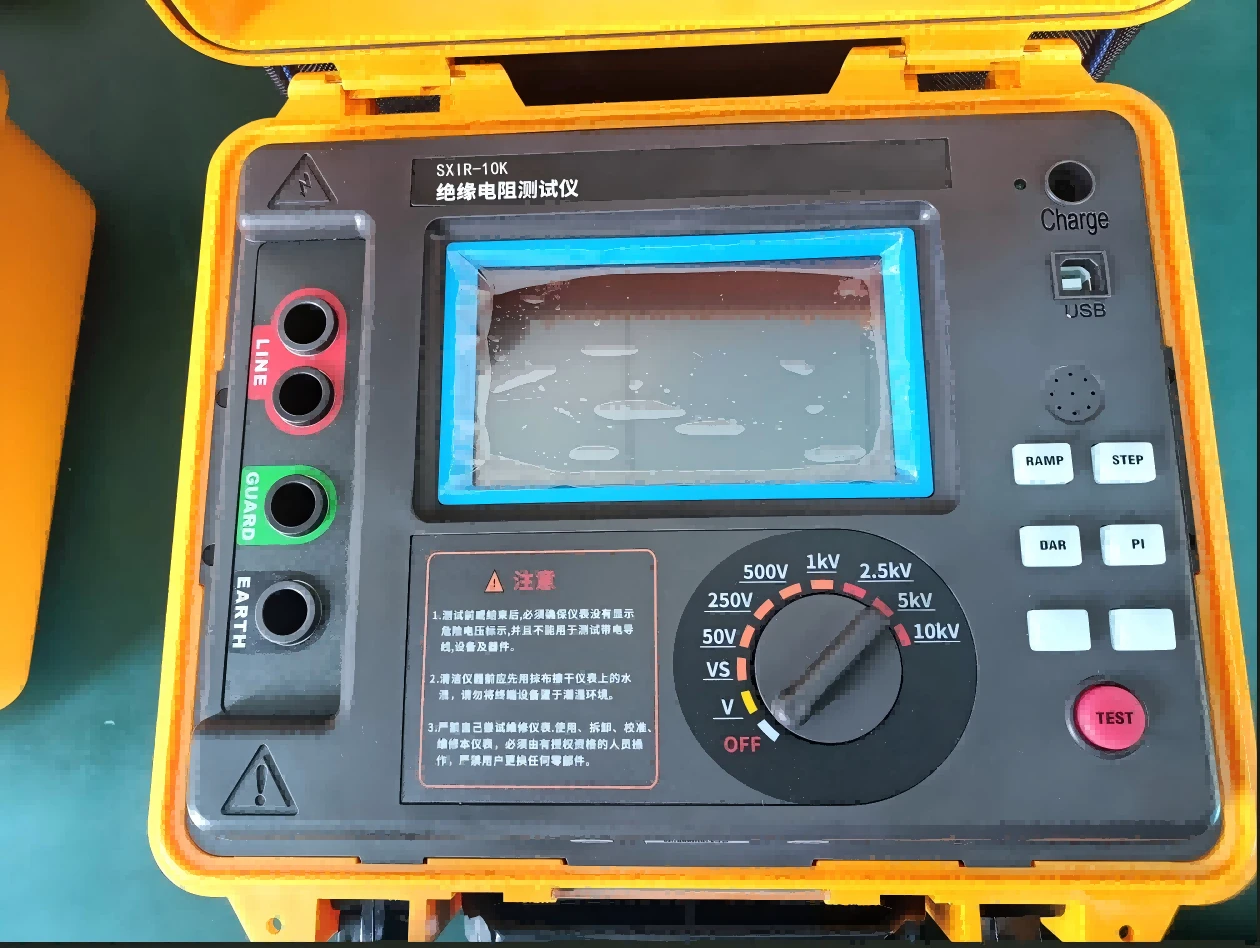
- Multiple Test Voltage Options: The device typically supports multiple DC test voltage levels, such as 250V, 500V, 1000V, 2500V, or higher, allowing users to select the appropriate testing voltage according to different equipment requirements and industry standards.
- Digital Display and Easy Operation: Equipped with a clear LCD display, the tester provides real-time measurement data, test voltage, leakage current, and other parameters. The intuitive interface enables operators to complete testing procedures quickly and efficiently, even in complex working environments.
- Safety Protection Design: Safety is a key consideration in insulation resistance testing. The tester features over-voltage protection, over-current protection, automatic discharge functions, and warning indicators to protect both the operator and the tested equipment during the measurement process.
- Portable and Durable Structure: Designed for field applications, the insulation resistance tester features a compact structure and durable housing. Its lightweight design allows convenient transportation and operation in substations, construction sites, factories, and maintenance locations.
Applications
- Power Transformers: Checking insulation conditions of transformer windings and ensuring long-term operational reliability.
- Electric Motors and Generators: Detecting insulation degradation caused by aging, moisture, or overheating.
- Power Cables: Evaluating cable insulation performance before installation and during regular maintenance.
- Switchgear and Distribution Equipment: Verifying insulation quality to prevent electrical faults and equipment damage.
- Industrial Electrical Systems: Supporting preventive maintenance and improving system safety.
Working Principle
The insulation resistance tester works by applying a controlled DC voltage between the conductor and insulation layer of the tested equipment. The instrument measures the resulting leakage current and calculates the insulation resistance value according to Ohm's law.
A higher insulation resistance value generally indicates better insulation performance, while a lower value may suggest insulation aging, contamination, moisture penetration, or potential electrical hazards. Regular insulation testing helps detect problems at an early stage and reduces unexpected equipment failures.
Advantages
- High measurement accuracy and stable performance
- Wide testing range for different electrical applications
- Multiple voltage settings for flexible operation
- Fast testing process with clear digital readings
- Reliable safety protection functions
- Suitable for laboratory and field maintenance use
Conclusion
The insulation resistance tester is an essential tool for electrical safety inspection and preventive maintenance. By accurately evaluating insulation conditions, it helps users identify hidden electrical problems, improve equipment reliability, and reduce the risk of failures.
With advanced measurement technology, user-friendly operation, and strong durability, insulation resistance testers provide an efficient testing solution for power systems, industrial equipment, and electrical engineering projects worldwide.