
Basic Concepts of Box-Type Substations
Definition and Principle
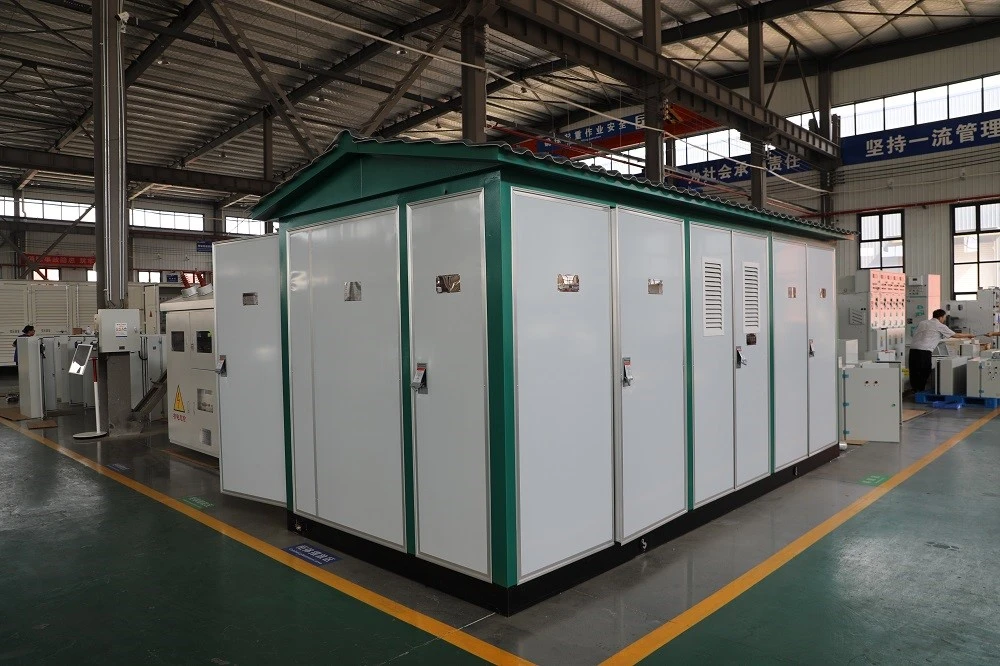
A box-type substation (also known as a packaged substation or compact substation) is a highly integrated power distribution solution. It pre-installs high-voltage switchgear, distribution transformers, and low-voltage distribution systems into a compact, enclosed structure according to specific electrical wiring configurations. Its core working principle is to step down high-voltage electricity (up to 35kV as standard) to low-voltage electricity suitable for end users, then distribute it to industrial, commercial, and residential applications. This integrated design eliminates the need for traditional indoor substations, offering a more flexible and efficient power supply alternative.
English Expressions
Common English terms for box-type substations include "box-type transformer substation", "box substation", "packaged substation", and "compact substation". In technical documents, "box-type substation" is the most widely used term, emphasizing the integrated and enclosed nature of the equipment. For example, in international procurement documents, it is often referred to as "integrated box-type substation" to highlight its all-in-one functionality.
Classification of Box-Type Substations
Based on Structural Form
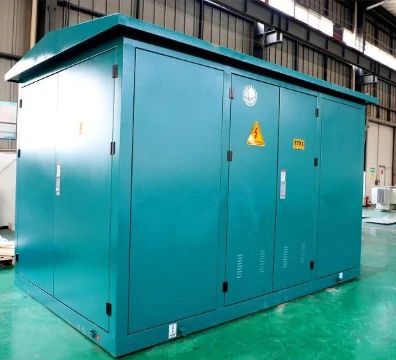
European-Style Box Substations: These separate the transformer as an independent component, integrating high-voltage cabinets, transformers, and low-voltage cabinets into a three-in-one structure. They typically have a larger volume but offer better maintainability, with independent compartments for high-voltage, low-voltage, and transformer rooms.
American-Style Box Substations: Characterized by a "delta-shaped" layout of the low-voltage room, transformer room, and high-voltage room, they feature a smaller footprint and superior heat dissipation performance. The integrated design simplifies installation and reduces overall costs, making them suitable for scenarios with limited space.
Based on Functional Use
Standard-Type Box Substations: Represented by models such as ZBW and XWB, they meet basic power distribution needs for general industrial and residential applications, covering functions like power distribution, lighting, and simple energy metering.
Compact-Type Box Substations: Examples include the ZB1-336 model and GE compact substations. They adopt optimized structural design and high-integration components to minimize size while retaining core functions, ideal for high-rise buildings, urban public facilities, and other space-constrained environments.
Development History of Box-Type Substations
Foreign Origin and Early Development
Box-type substations first emerged in Western developed countries such as Europe and the United States in the 1960s. Driven by the demand for efficient urban power grid construction and industrialization, their integrated design, easy installation, and low maintenance costs quickly gained attention. Early products focused on basic power distribution functions, with relatively simple structures and limited technical parameters.
Domestic Introduction and Rapid Development
In China, box-type substations were introduced and imitated from France, Germany, and other countries in the late 1970s. However, large-scale development did not begin until the late 1990s, with the launch of rural and urban power grid renovation projects. Driven by national infrastructure construction, urbanization, and industrial upgrading, domestic manufacturers such as Shaanxi Sefon Electrical Equipment Co., Ltd. have continuously improved R&D and manufacturing capabilities, integrating advanced technologies like full sealing, full insulation, and intelligent control, making China a major producer and consumer of box-type substations.
Current Market Situation
Global Market Scale and Trends
The global box-type substation market is expected to maintain steady growth from 2024 to 2034, with a compound annual growth rate (CAGR) of approximately 6-8%. Key driving factors include accelerating urbanization in emerging economies, the development of renewable energy (such as wind and solar power, which require matching distribution equipment), and the upgrading of aging power grids in developed countries. The market is increasingly inclined towards intelligent, modular, and energy-saving products, with high-voltage (above 20kV) and special-environment (high altitude, extreme temperature) customized products gaining more market share.
Domestic Market Competition Pattern
China's box-type substation market has a relatively low concentration ratio, with a mix of large state-owned enterprises, private high-tech companies, and foreign-invested enterprises. Major players include Xuji Electric, Shanghai Zhixin Electric, and Shaanxi Sefon Electrical Equipment Co., Ltd. The state grid and southern grid procurement projects account for a significant proportion of the market demand, with product quality, technical innovation, and after-sales service being the core competitive factors. In recent years, domestic enterprises have strengthened technological research and development, narrowing the gap with international brands in terms of product performance and reliability, and gradually expanding their market share in both domestic and overseas markets.
Application Fields
Public Utilities
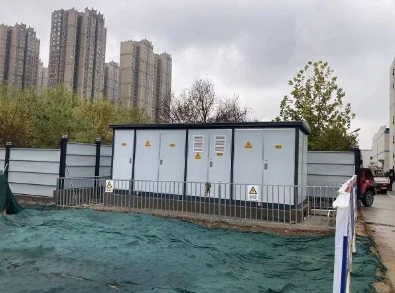
Box-type substations play a crucial role in power transmission and distribution for public utilities. They step down high-voltage electricity from transmission lines to low-voltage power suitable for local distribution, ensuring reliable power supply for residential areas, urban roads, parks, and other public facilities. Their compact design allows for flexible installation in urban green spaces or along roads, minimizing the impact on the urban landscape.
Commercial Sector
In commercial settings such as office buildings, shopping malls, hotels, and retail stores, box-type substations meet the demand for stable and flexible power supply. They can be customized to integrate functions like reactive power compensation and precise energy metering, adapting to the fluctuating power consumption of commercial facilities. The maintenance-free design and safe operation features also reduce operational costs for commercial users.
Industrial Scenarios
Box-type substations are widely used in industrial and mining enterprises, docks, factories, and other industrial sites. They can withstand harsh industrial environments (such as corrosion, dust, and vibration) and meet the special power requirements of industrial production, such as high current supply and continuous operation. The choice of transformers (fully sealed oil-immersed or dry-type) and switchgear (SF6 switch cabinets) can be tailored to the specific industrial environment, ensuring stable power support for production lines.
Future Outlook
Intelligent Development Trend
With the integration of the Internet of Things (IoT), big data, and artificial intelligence (AI) technologies, box-type substations are moving towards intelligence. Future products will feature remote monitoring, automatic fault diagnosis, and predictive maintenance functions, allowing operators to real-time monitor equipment status, identify potential issues, and perform maintenance proactively. Intelligent circuit breakers and digital control systems will also enhance the accuracy and efficiency of power distribution, optimizing the operation of the entire power grid.
Modular Design Direction
Modular design will become a core development direction for box-type substations. By standardizing components and adopting a modular structure, manufacturers can simplify production processes, reduce costs, and shorten delivery times. Users can flexibly combine functional modules (such as high-voltage modules, low-voltage modules, and transformer modules) according to their needs, realizing rapid installation and expansion. This design also facilitates maintenance and replacement of components, improving the overall lifecycle efficiency of the equipment.
Application of Energy-Saving and Environmental Protection Technologies
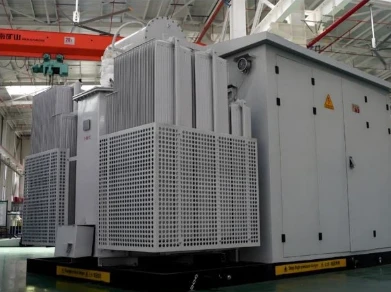
Energy conservation and environmental protection will be key focuses in the development of box-type substations. The adoption of new energy-saving transformers (such as amorphous alloy transformers) and high-efficiency electrical components will reduce energy loss during operation. Meanwhile, the use of environmentally friendly materials (such as corrosion-resistant and recyclable shell materials) and low-pollution processes will minimize the environmental impact. In addition, the compatibility with renewable energy sources (such as solar and wind power) will promote the integration of clean energy into the power grid, supporting the achievement of global carbon neutrality goals.
Core Technical Parameters and Configuration
Leading Technologies
Fully enclosed and fully insulated structure, ensuring safe and reliable operation.
Easy operation, maintenance-free design, and lower equipment costs.
Cabinet Configuration
Sturdy box shell with thermal insulation and ventilation functions, stable performance (corrosion-resistant, dust-proof, waterproof), and aesthetic appearance.
Multiple shell material options: steel plate, composite plate, stainless steel plate, cement plate, etc.
Protection class up to IP67.
Functional Units
Divided into three independent compartments: high-voltage room, low-voltage room, and transformer room.
High-voltage room adopts SF6 switch cabinets such as XGN15 and HXGN17.
Low-voltage side uses panel-type or cabinet-type structure to form user-specific power supply solutions, meeting functions like power distribution, lighting distribution, reactive power compensation, and energy metering. The main switch is generally a universal circuit breaker or an intelligent circuit breaker, featuring flexible installation and easy operation.
Transformers can be fully sealed oil-immersed transformers or dry-type transformers.
Busbar System
Adopts three-phase four-wire or three-phase five-wire system.
High-quality three-phase tinned busbar copper bars with high mechanical strength and good heat dissipation.
Operating Environment Conditions
Maximum ambient air temperature: ≤45℃; minimum ambient air temperature: ≥-45℃.
Altitude: ≤1000m (can work at up to 4000m with specially customized transformers and low-voltage components).
Vertical inclination: ≤5°, no severe vibration or impact.
Air humidity: ≤90% (+25℃).
Suitable for places without conductive dust, explosive hazards, or corrosive gases (harmful to metals and electrical components).
Outdoor wind speed: ≤35m/s.
Customized solutions are available for environments beyond the above conditions.